Doug Parry, bowyer
Hey there, I'm Doug Parry. I'm the bowyer behind Archey Bowman, and I make every bow myself in my workshop in Ellensburg, Washington. I've done custom woodworking for more than fifty years, and since about 2008 I've made nothing but bows: thousands of traditional English longbows and heavy warbows, one at a time.
How I make a bow
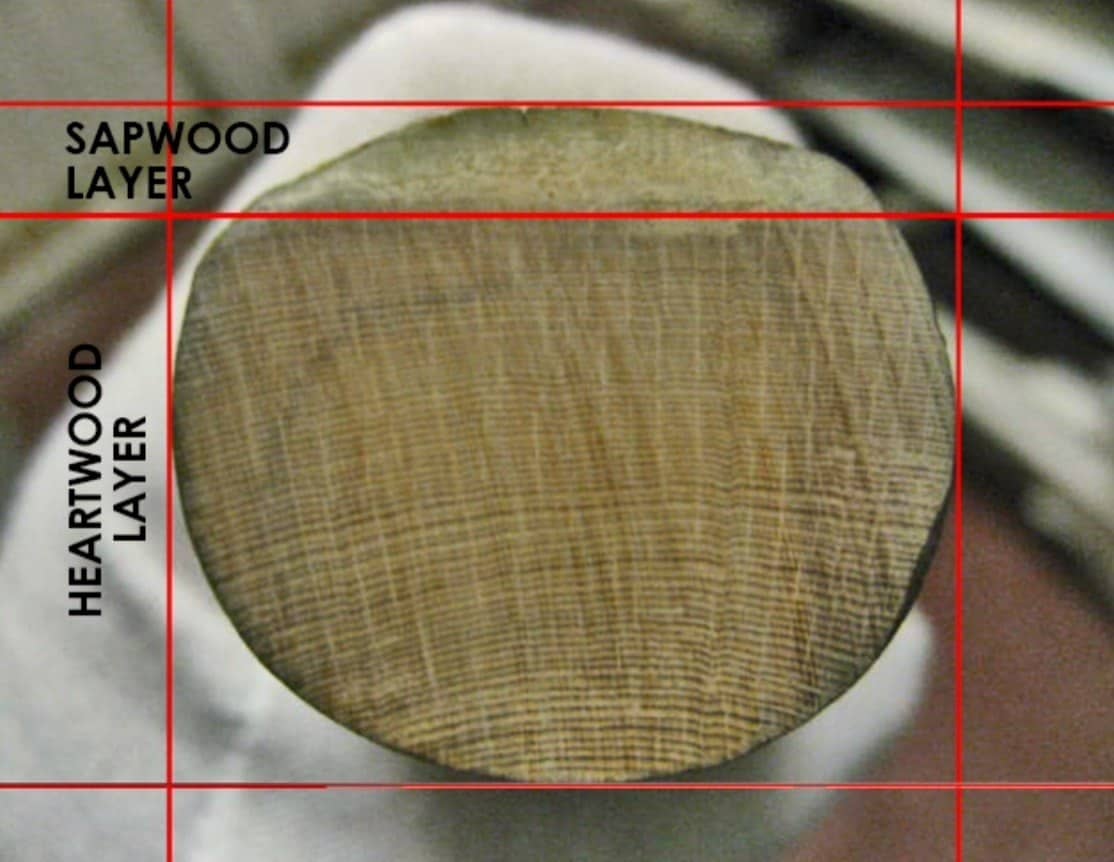
Not all wood makes a good bow. A bow is a dynamic thing; it bends, it shoots, and it has to come back. So I search far and wide for wood with the right grain, and over the years I've tested just about everything. Ipe is my favorite for strength and color. Osage makes a lovely bow, but it's hard to find. Maple won't make a bow at all.
Making a bow is more like writing a short story. The gratification comes pretty quick.
Most of my bows are laminated. I back them with barrel-tapered Moso bamboo and give them ipe and hickory bellies. My tri-lams have an ipe core between the bamboo and a white hickory belly, and I'll glue up as many as five layers in what I call my "quint" bows. I make selfbows too, from a single piece of straight-grained white hickory.
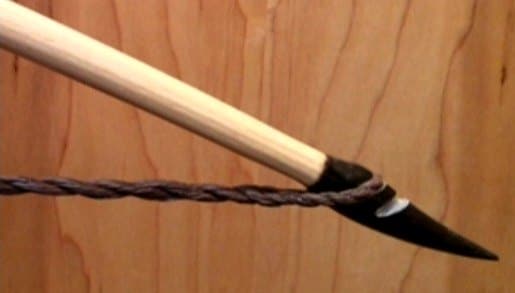
I glue each bow up on a form with about two inches of reflex in it. I shape the limbs after the bows raised from the Mary Rose, Henry VIII's warship, which sank in 1545, so they're rounded, just a little wider than deep. I thin the tips right down to about three-eighths of an inch at the horn, and shape the buffalo horn tips into long points.
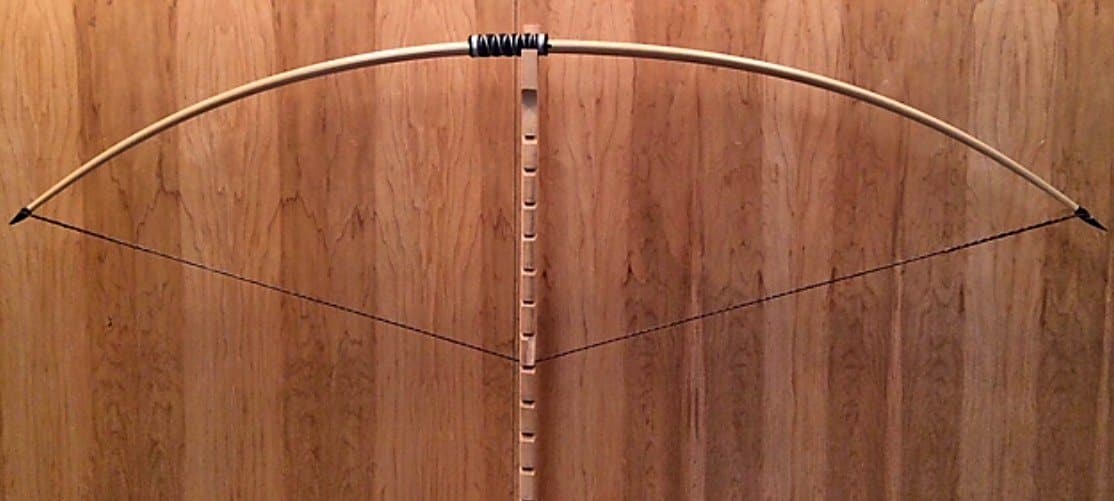
Then comes the tiller. I string the bow up and draw it back a little at a time, taking wood off the belly, mostly with a hand scraper, until both limbs bend in one even arc. If I look too hard, I can't see it. So I walk away from the bow, turn, and look, and in that instant I can tell where it's off.
…I come to the point where I walk away and turn and it'll just be beautiful. It's perfect and that's when it's a bow.
What goes into every bow is listed on my bows page, along with the warranty. My bows are listed on eBay as archeybowman, where I have 100% positive feedback and about 2,000 items sold (October 2026).
I love the whole process, the smells and it makes me a good living. I mean what more could I ask for?
My interview on WHYY's The Pulse
Handmade Tales · WHYY's The Pulse · 2021
"Handmade Tales," produced by Diana Opong for WHYY's The Pulse (September 24, 2021). Hear the full episode on WHYY
- The Pulse
- You're listening to The Pulse. You can find our show wherever you get your podcasts. Making something by hand means you really have to understand the material you're working with and what it takes to get it to behave a certain way.
- Doug
- My name's Doug. I'm a master bowyer from Washington state. I own a bow making business called Archey Bowman.
- The Pulse
- Doug makes six foot English longbows for a living, coaxing wood to bend into a perfect arc.
- Doug
- I'm trying to take raw lumber, which is rough cut, and see a story. It's all a new story each time. And it's not like a long drawn out job where you are building cabinets and millwork for a house. And it's super intense.
- Doug
- That's more like writing a book or novel. Making a bow is more like writing a short story. The gratification comes pretty quick. Every wood has a unique smell. When I'm cutting or sanding, I'm just immersed in all these great natural smells from nature and the wood is very special because not all wood makes a good bow because a bow is a very dynamic thing and it shoots.
- Doug
- Normal wood sits there and is pretty, and is a cabinet door or it's known more for its beauty. Now, I'm looking for wood that's known more for its strength. I've tested all kinds of woods and I've had all kinds of failures and I pretty much know what to look for, but I'm always learning.
- Doug
- I'm looking for grain that would make a good bow. And trees grow all different ways and they're all under all kinds of stress. And I have to search far and wide for the right kind of wood to use in my bows.
- Doug
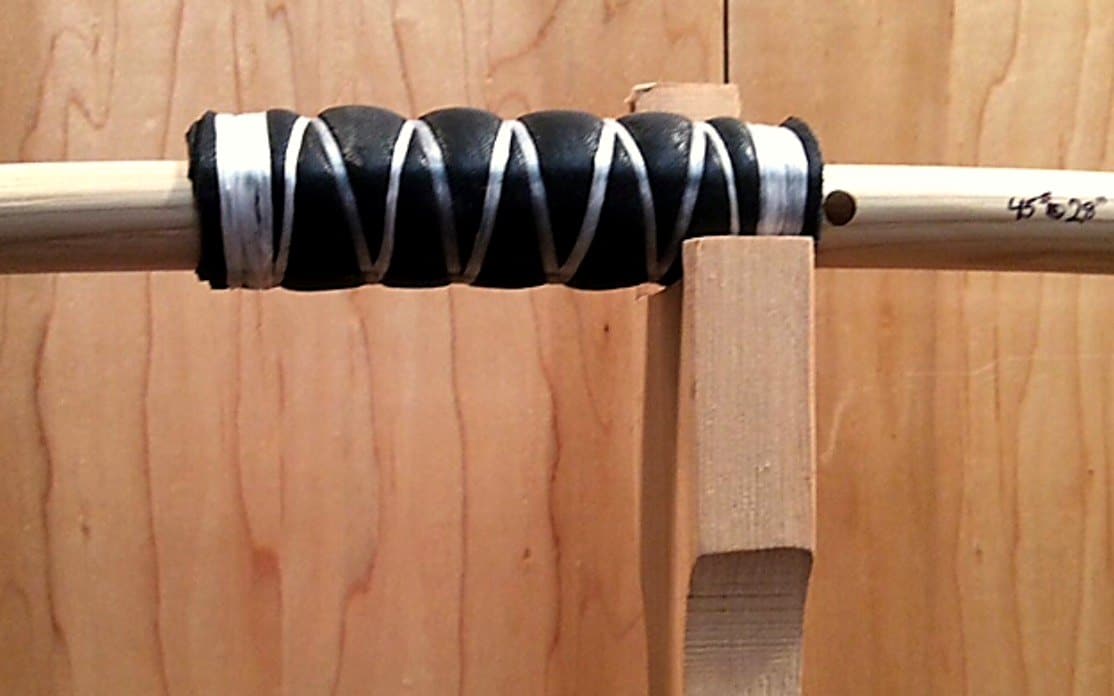
- I use bamboo, I use all natural woods, hickory mostly, and some exotic woods. I use deer skin for the handle wraps and I use water buffalo horn for the tips. The next step is tillering, which is where I string up the bow and draw it back little by little to start flexing the wood.
- Doug
- To make it a perfect arc. And it's an intuitive kind of look. If I stretch out the bow and it's off a little bit and I look too hard at it, I can't see it. So I have to walk away from the bow and turn and look at it.
- Doug
- And in that instant, I can feel where it's off. And I have that unique ability in my life is to see balance. I'm always looking at balance. I can see where it's off and it all kind of starts to come together where it reveals itself as you work the bow because I'm using a hand scraper and a sander and mostly a hand scraper which is really intensely physical and I get all pumped up and I'm just like a weight lifter after I scrape out a bow and then I come to the point where I walk away and turn and it'll just be beautiful.
- Doug
- It's perfect and that's when it's a bow. When you have a really nice instrument like a guitar or a bow or something that performs and you shoot it you really get excited. It's just got a feeling and it gets you going and it makes you want to do it again and get into it and inspires you to shoot and get into the discipline of archery and I love making bows.
- Doug
- I love the whole process, the smells and it makes me a good living. I mean what more could I ask for?
- The Pulse
- Doug's business is called Archey Bowman. His story was produced by Diana Opong.
Doug Parry is one of the finest makers of mediaeval English longbows… that I have ever known.
…Since I first saw his bows on eBay, Doug always publishes good quality pictures of his bows unbraced, braced and partially drawn to 22 inches to show the bow's tiller. I was compelled to want one of them once I realized how very good his tillering was.
I now have several of them and nothing has declined in production values from the first to the most recently obtained. If anything, since he has introduced a full length reflex of about 2 inches into his gluing form, performance has improved a lot.
…Doug's are so made that at full draw on a tiller the eye is easily tricked into thinking that one is viewing a genuine circle of bend…
…My bows from Doug have tips at the horn joint which are barely 3/8" wide and not as deep. They are very fine indeed, but entirely proportional to the body of the bow without being bulbous…
…He has also changed the cross sectional profile of his ELBs too. Originally he made them to the well known Victorian D-section profile before later changing slightly to the profile actually displayed by the Mary Rose (MR) bows of being a flattened ovoid shape wider than thick (but not by much)…
…However, I cannot work out how amazingly straight his bows remain after continuous shooting, barely taking less than 1 inch of set or 1.5 inches of set after shooting which very quickly straightens out after rest.
…He makes laminated bows from up to 5 laminations which he calls his 'quint' bows…
…Longbows were not longbows just for their names-sake or some silly notion of traditional style. They were serious battle weapons and were purpose built and treated as seriously. Doug's bows have carried on in that vein…
…In finishing this article, I must comment on the use of a remarkable finish that Doug has been using of late which is called 'Osmo'.
This remarkable finish has a very definite and 'soft' feel of a finely sanded finish. It is difficult to explain, but the finish just doesn't have the common cold and hard feel that so many finishes these days have.
In the workshop, 2016
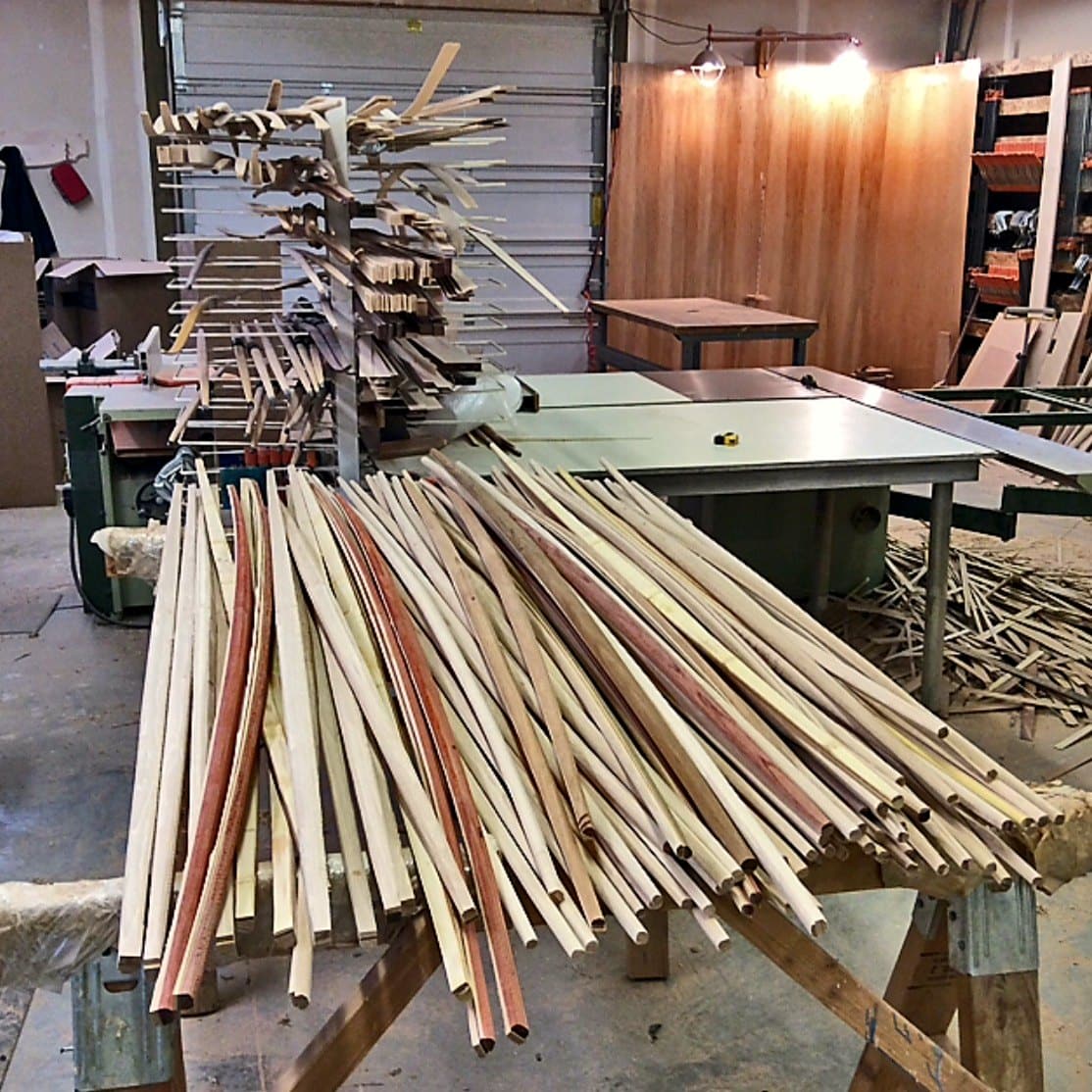
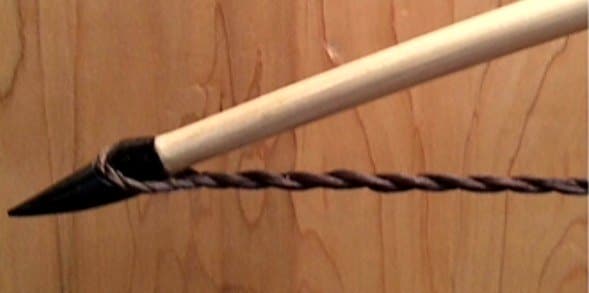
These are from the 2016 review: a bench full of bow blanks, a bow on the tiller, the horns and the wrap.